
This post originally appeared on Trans-Missions, the USC Knight Chair in Media and Religion site.
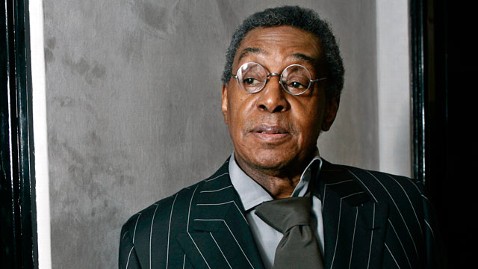
At the beginning of Black History month we were greeted with tragic news: Don Cornelius, the founder of “Soul Train,” committed suicide. While this event has little to do with religion on its face, a story on CNN (aptly titled “How Don Cornelius Became the Pope of Soul”) offered a powerful reminder of the role of culture, art and music in bridging racial divides and in the civil rights movement itself. “The civil rights movement changed the legal structure,” the authors wrote, “Cornelius changed the cultural structure. Changing the culture can change hearts in a way that protests can’t.”
As we remember the ways Don Cornelius brought racial groups together through music, we may also reflect upon how, almost a century ago, Pentecostalism once brought blacks and whites together through religion. Blending ecstatic musical celebration and crossing racial divides, the beginning of Pentecostalism in the United States is a fascinating story of spiritual and cultural innovations that upended the racial barriers of the time. It is a history that seems to have been forgotten, however, as Pentecostal began to splinter into different black and white denominations. In the wake of Don Cornelius’ death, the history of Pentcostalism should be a reminder that we cannot take social change for granted–progress requires vigilance.
Early Pentecostalism was seen as a potentially subversive movement that worried the FBI enough to work with local law enforcement and the Justice Department to place Charles Mason, an African-American Pentecostal leader and part of the 1906 Azusa Street revival, under close surveillance. Federal officials were concerned not only about Mason’s interracial following but also his pacifist views in the context of World War I. The racial and political overtones of the fear sparked by this upstart religious group arguably foreshadowed the current surveillance of American Muslims throughout the United States.
Yet Islam is hardly an upstart religion in this county. Reporters could illuminate the early stories of African Muslims who were brought to the United States as slaves, and how African-American Muslims continue to shape expressions of Islam in the U.S. for themselves, for the children of immigrants and for countless converts in every shade and color.
Other items worth pursuing are the ways in which black churches are operating in and responding to a globalized environment. Potential stories range from the challenges of creating multiracial churches, to what it means for African-Americans to own church property in neighborhoods that are no longer predominantly black but increasingly Latino and Asian, to the “remissionizing” of the United States by African immigrants in ways that are reshaping American Christianity, just as Pentecostalism did at the beginning of the last century.
Changes happening in larger society are echoed and reflected in the Black Church and in other congregational settings–and vice versa. The housing bubble was no doubt caused by predatory lending practices, but it also happened at the height of the prosperity gospel. How are these two phenomena linked, or not, in the context of contemporary African-American culture?
There is no better time than Black History month to dig deeper into the rich, religiously-infused history of African-Americans–and to remember that religion and other aspects of culture are in constant dialogue with each other. Uncovering the influences that shape one subculture, you may just reveal some profound truths about the rest of society.
Photo of Don Cornelius from the AP.
Brie Loskota is the former executive director (2016-2021) of the USC Center for Religion and Civil Culture.